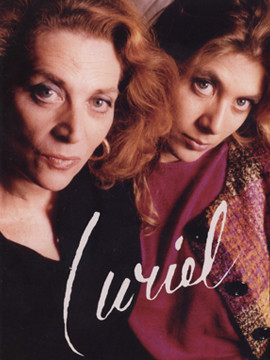
Madame Ortensia Curiel, the eldest of eight children, founded the house of CURIEL in 1908 in the port city of Trieste in northeastern Italy. Beginning with bespoke tailoring services, she swiftly established herself as the most sought-after couturier in the region.
Hailing from the esteemed Curiel family, Ortensia shared a cherished friendship with the renowned Italian poet Umberto Saba, enriching the brand’s heritage with cultural resonance.
Her inaugural creations captivated an intimate circle of distinguished acquaintances, which soon expanded to attract elegant patrons from Vienna, Budapest, and Paris, alongside celebrated actresses and opera singers—laying the foundation for CURIEL’s legacy of timeless sophistication.

Gigliola Curiel was twenty-five when she resolved to pursue her dream. A woman of dauntless spirit, innovative vision, and timeless elegance, she embodied the essence of the modern woman. Amidst the profound darkness of the 20th century, she clung to her unwavering childhood aspiration: to create designs that would illuminate a woman's innate radiance. Though confronted by war, persecution, and exile, she ultimately brought her sublime vision to life.
“Mia madre passava il mattino fra lelavoranti, faceva osservazioni, dava ordini. Responsabilizzava i collaboratori e otteneva ciò che voleva. Su questo terreno, io non leguaglierò maiPer ottenere cio che voglio, io devo sgolarmi, arrabbiarmi, rodermi il fegato.Il vantaggio della mamma, era la sua indole lieve. Sapeva dire le cose piùterribili con grazia e senza mai tenere bronci, lavorare con lei era facile.” —— Raffaella Curiel

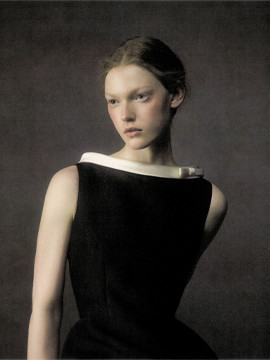
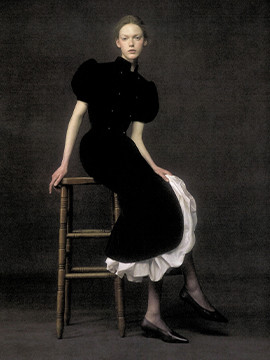
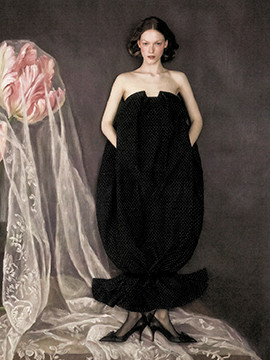
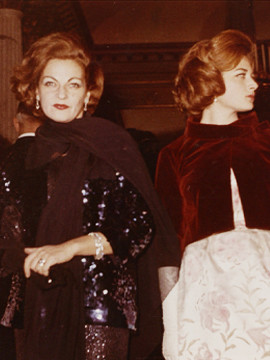
In 1945, Gigliola established her first atelier in Milan, where over sixty artisans meticulously crafted garments for the city's most discerning and affluent women. In an era that epitomized the desire for renewal, her creations swiftly became indispensable to the haute monde. Her signature Curiellino little black dress, celebrated for its impeccable Italian taste, achieved such prominence that it became a staple in the wardrobe of nearly every Milanese woman. Dresses by Gigliola were highly coveted by society ladies, who eagerly wore them to the most anticipated events in Milan's high society—the premieres at Teatro alla Scala.

In the 1960s, La Scala reigned as the stage where sublime artistry met supreme elegance. Here, Gigliola Curiel began a new chapter, designing for the opera divas themselves. This creative partnership was her signature form of patronage: a sartorial dialogue that supported both the hallowed stage and the art form she adored.

During a visit to the United States in the late 1950s, Gigliola Curiel made a pivotal observation: while America had already established a sophisticated ready-to-wear system, Italy had yet to develop a comparable model. With her pioneering spirit, she became the first to introduce Italian ready-to-wear to the American market, insisting on local production. This visionary move culminated in 1958, when she became the first Italian designer ever to create exclusive collections for London's Harrods and New York's Bergdorf Goodman.

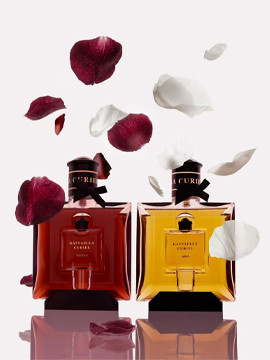
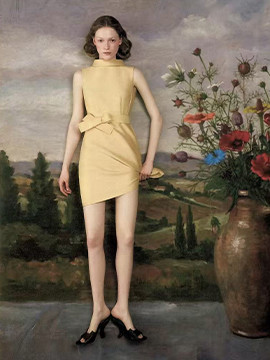
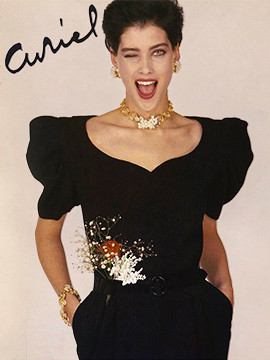
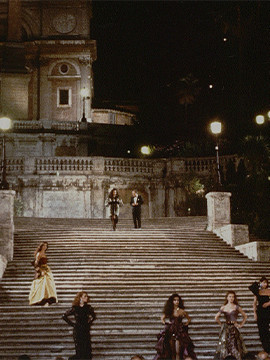
Succeeding her mother, Raffaella launched her first boutique in 1990, swiftly guiding the brand to a global footprint across four continents. She boldly diversified the maison's offerings beyond apparel into a full spectrum of accessories—from fragrance and sunglasses to jewelry, watches, bags, scarves, and home furnishings. Her ALTA MODA work, celebrated for dialogues with art masters and world cultures, and her sophisticated suits were coveted by international elite. The crowning achievement of her stewardship came in 1996, when she was awarded Italy's Knight of the Grand Cross, elevating CURIEL to its zenith.

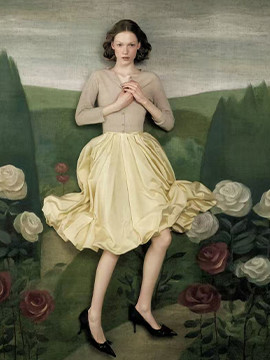
Raffaella possessed a profound passion for art, which manifested in a design style that was intense, richly chromatic, and untamed. Her work embodied a distinctive form of eclecticism and romanticism, crafting an aesthetic that was entirely her own. Among her signature elements, the mermaid silhouette remained her most beloved and iconic contour, elegantly articulating her visionary approach to form and femininity.
"L'allure non dipende da ciò che porti, ma da come ti proponi, come cammini." —— Raffaella Curiel

Though initially aspiring to be a doctor, Raffaella carried a lifelong pursuit of intellectual and cultural enrichment throughout her career in fashion. An avid world traveler, she delighted in cultivating friendships with leading figures from politics, business, and the arts, often hosting vibrant salons in her home. This unique blend of global perspective and cultured intellect earned her the esteemed title of "Fashion Intellectual" from the Italian media.
"Come dicono gli inglesi the right thing in the right place. Bisogna usare la moda, non essere usati dalla moda" —— Raffaella Curiel

Raffaella's numerous accolades honored not only her design brilliance but also her profound humanitarian spirit. Her active philanthropy and generous nature led the Italian press to christen her "The Lioness." She courageously battled cancer on the front lines, co-founded the Anti-Drug League of Lombardy, and from the 1990s, championed the welfare of incarcerated women. A vocal advocate for blood donation, she also boldly proclaimed that her models should not embody the extreme thinness the industry had once normalized.

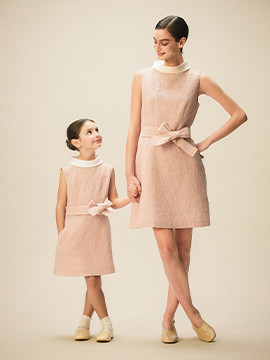
Following the 1990s, her daughter, Gigliola Curiel Jr., stepped into her legacy as the fourth-generation heir. With a dual mastery of art and commerce, she introduced a ready-to-wear vision that was vibrant, deeply feminine, and intelligently connected fashion to refinement and culture. In a masterful tribute to her heritage, she reinterpreted the iconic little black dress for a new generation, reinventing the code with youthful sophistication.